

Watch Movies Online Free: 9 Legal UK Sites That Actually Work
- August 19, 2026
- 0
If you’ve searched to watch movies online free, you’ve probably already hit a wall of pop-up-riddled, ad-stuffed sites that look one click away from a virus. The good



9621 Agnes Crossing, Lake Suzanneview, New Mexico Island 84604-9295.
If you’ve searched to watch movies online free, you’ve probably already hit a wall of pop-up-riddled, ad-stuffed sites that look one click away from a virus. The good
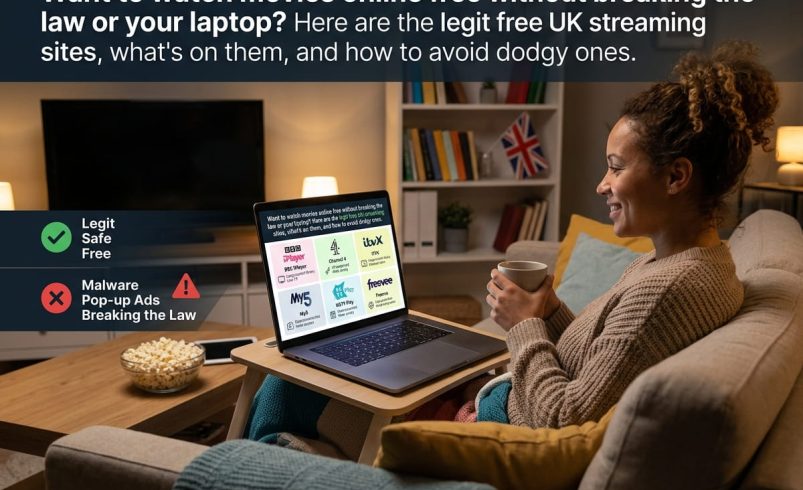
If you’ve searched to watch movies online free, you’ve probably already hit a wall of pop-up-riddled, ad-stuffed sites that look one click away from a virus. The good news: there are legitimate, completely free ways to watch movies online in the UK, no downloads, no sketchy pop-ups, no card details needed. This guide covers the real ones, what’s actually on them, and why the “free movie streaming” sites that dominate search results are best avoided entirely.
We’ll go through each platform, what kind of films you’ll find, and a few honest caveats, because free services do come with trade-offs like ads or smaller libraries.
The safest and most reliable way to watch movies online free in the UK is through ad-supported, licensed platforms: BBC iPlayer, Amazon Freevee, Pluto TV, ITVX, Channel 4 (via My4), Plex, Tubi and YouTube’s free film hub. All of these are legal, funded by advertising rather than subscriptions, and don’t require you to hand over payment details.
None of them will have this month’s cinema releases. What they do have is a rotating library of older films, some genuine gems, and enough range that you can fill an evening without paying a penny.
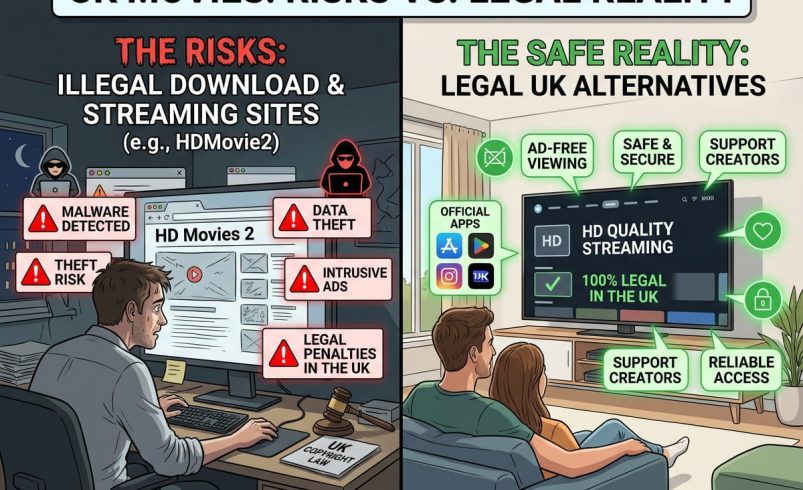
Illegal streaming sites aren’t just a legal risk, they’re a security one. Many are laced with malicious adverts that can install malware on your device, and UK courts have handed out real penalties for both running and knowingly using pirate streaming services. It’s not worth it when free legal alternatives already exist.
BBC iPlayer is free for anyone with a TV Licence (£174.50 a year as of April 2025), and you need one even if you only stream, never watch live TV. Its film library leans towards British cinema, BBC-commissioned documentaries, and a solid rotating selection of older studio films.
New titles get added weekly, and you can browse by genre or decade. No ads interrupt the films themselves, which is unusual for a free service.
ITVX replaced the old ITV Hub and is completely free to sign up for, funded by ad breaks during playback. Its film catalogue mixes recognisable studio titles with ITV’s own back catalogue, and it refreshes regularly enough to be worth checking every few weeks.
Expect a short ad break every 15 to 20 minutes on the free tier. There’s a paid ad-free tier too, but you don’t need it to watch movies online free here.
Channel 4’s streaming service carries a decent spread of independent and cult films alongside mainstream titles, again supported by ads rather than subscriptions. Sign-up takes under a minute with just an email address.
It’s particularly strong for older comedies and British films that don’t always show up on bigger platforms.
Freevee is Amazon’s genuinely free, ad-supported service, and importantly it doesn’t require a Prime subscription to use. You just need a free Amazon account.
The library skews towards mid-budget action films, older comedies and a handful of surprisingly recent titles. Ads run roughly every 10 to 15 minutes.
Pluto TV works differently to the others: it’s a mix of on-demand titles and live, scheduled “channels” that play films back to back like an old-fashioned TV schedule. No account is required at all to start watching.
It’s especially good if you want something on in the background rather than hunting for a specific title.
[Table: Comparison of free UK streaming platforms, sign-up required, ad frequency, library focus]
Tubi launched properly in the UK in 2023 and has grown its library steadily since. It’s fully free, ad-supported, and covers a wide spread of genres including horror, action and a strong documentary section.
Account creation is optional if you just want to browse and watch without saving favourites.
Plex has a genuinely free, ad-supported film section (separate from its media server software), covering everything from classic films to newer independent releases. You’ll need a free account, but no payment details.
It’s one of the more polished free interfaces, closer in feel to Netflix than the others on this list.
YouTube quietly runs a free movies with ads section, accessible from the main YouTube homepage or by searching “free movies” within the app. Titles rotate monthly and range from studio B-movies to a handful of well-known films.
No separate sign-up is needed beyond your existing Google account.
If you already own a Freeview Play or Freesat-connected TV, you’ll have access to a bundle of the above (iPlayer, ITVX, My4, Freevee) through one interface without installing separate apps. It’s a good option if you’re watching mainly through a smart TV rather than a laptop or phone.
This is the bit most guides skip, and it’s the most important part. Sites promising every new release for free, with no ads, no sign-up and no catch, are almost always operating illegally and are frequently unsafe.
Common warning signs include: a flood of pop-up ads that open new tabs the moment you click play, prompts to “install a codec” or browser extension before a video will run, and domain names that change every few months to dodge takedowns. If a site ticks any of those boxes, close the tab.
Using these sites isn’t just risky for your device. Streaming from clearly unauthorised sources sits in a legal grey area for viewers and a firmly illegal one for the people running them, and UK internet providers have started blocking known piracy domains at ISP level, which is often why “that site I used last week” suddenly stops loading.
A few practical tips once you’ve picked a platform:
Yes, through licensed ad-supported platforms like BBC iPlayer, ITVX, Channel 4, Freevee, Pluto TV and Tubi. What’s not legal is streaming from unauthorised piracy sites, even though enforcement against individual viewers is rare, the sites themselves are operating illegally and often unsafely.
Yes. You need a valid TV Licence (£174.50 a year) to watch or download any programme on BBC iPlayer, live or on demand, even if you never watch traditional broadcast TV.
It depends what you’re after. iPlayer tends to be strongest for British and arthouse films, Freevee and Tubi lean towards action and genre films, and Pluto TV is best if you want scheduled channels rather than picking a title yourself.
The licensed platforms listed here (iPlayer, ITVX, Freevee, Pluto TV, Tubi, Plex, YouTube) are safe and run by established companies. Unofficial “free movie” sites are a different story: many carry malicious ads that can install malware, so they’re best avoided regardless of legality.
Yes, to an extent. Pluto TV and YouTube’s free movie hub let you start watching without creating an account, though most other platforms need at least a free email sign-up.
Licensing deals are time-limited. Platforms pay for the right to show a film for a set period, often 6 to 12 months, and once that window closes the title comes down until (or unless) it’s re-licensed.
No. Freevee is a separate, fully free, ad-supported Amazon service, while Prime Video is the paid subscription tier. You don’t need a Prime membership to use Freevee.