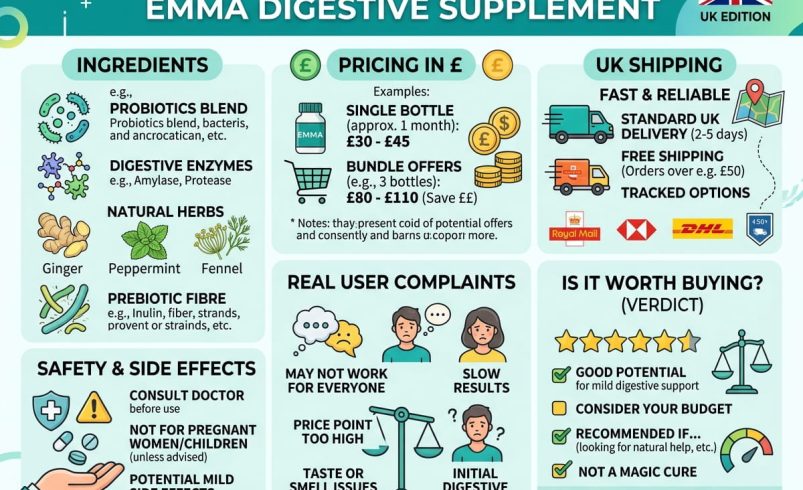
If you’ve seen the adverts for bloating, constipation and gas relief and you’re wondering whether this Emma digestive supplement review will actually answer your questions, here’s the short version: Emma Relief is a US-made, doctor-formulated blend of 18 ingredients built around berberine, DGL and quercetin, designed to target bacteria in the small intestine rather than add new bacteria the way a probiotic would. It’s not sold through an official UK store, it isn’t cheap once you factor in shipping and currency conversion, and the subscription model has drawn a fair number of billing complaints. Below, we cover the ingredients, the price in pounds, whether you can even buy it here, and what real users say once the marketing is stripped away.
What Is Emma Digestive Supplement?
Emma Relief was developed with input from Dr Gina Sam, a US board-certified gastroenterologist, and it’s marketed as the first doctor-endorsed formula built specifically to rebalance the small intestine rather than the whole gut microbiome. That’s the core pitch behind every Emma digestive supplement review you’ll find: this isn’t a probiotic, a laxative, or a fibre supplement, and the brand is quite insistent about all three of those distinctions.
The product ships as capsules, taken twice daily with food, and it’s aimed at people dealing with bloating, constipation, gas, and the vague “leaky gut” discomfort that’s become a popular search term over the past few years. It’s sold directly through the brand’s US website and through Amazon.com, with a smaller footprint on shelves at GNC stores in America.
Emma Relief Ingredients: What’s Actually in the Formula
The Key Actives
The formula runs to 18 ingredients, but a handful do the heavy lifting in the marketing and, likely, in the actual effect. The headline actives are berberine, deglycyrrhizinated liquorice (DGL), quercetin, star anise, resveratrol, chicory root inulin, zinc, and allicin, the last of which comes from garlic.
Berberine gets the most attention because it’s genuinely well-studied for blood sugar and gut bacteria balance, though the doses used in proprietary blends like this one are rarely disclosed individually. DGL is a common choice for soothing the gut lining and has a long history of use for heartburn and mild inflammation. Quercetin and resveratrol are both polyphenols associated with anti-inflammatory and antioxidant effects, though independent reviewers have flagged that the amounts used in supplements like this are often too small to match the doses used in clinical studies.
What’s Missing (And Why That’s the Point)
Unlike most gut health products on the shelf, Emma deliberately leaves out probiotics, fibre, and stimulant laxatives. The brand’s own reasoning is that fibre can feed the wrong bacteria in someone with an existing overgrowth, and that most oral probiotics don’t survive stomach acid in meaningful numbers anyway. Whether that reasoning holds up against a bowl of live yoghurt or a standard psyllium husk supplement is a fair question, and it’s one the brand doesn’t fully answer on its own marketing pages.
How Emma Relief Is Meant to Work
The pitch centres on methane-producing bacteria in the small intestine, which some research links to slower gut transit and persistent bloating. Rather than adding new bacterial strains, Emma is positioned as a formula that discourages the bacteria types associated with bloating and gas while supporting strains like Akkermansia and Bifidobacteria that are already present.
This is a more specific mechanism than most digestive supplements bother to claim, and it’s the main reason Emma gets discussed alongside SIBO (small intestinal bacterial overgrowth) protocols rather than general gut health products. It’s worth being clear, though: this is the brand’s own explanation of its mechanism, not an independently verified clinical claim, and no peer-reviewed trial of the finished Emma formula itself appears to be publicly available.
Is Emma a Probiotic? Why the Brand Avoids That Label
A lot of people search for an “emma probiotic” expecting a standard live-bacteria supplement, and it’s worth clearing this up directly: Emma Relief contains no probiotic bacterial strains at all. The brand’s entire positioning is built on being an alternative to probiotics, not a version of one.
If you’re specifically after live cultures, strains like Lactobacillus or Bifidobacterium in a standalone probiotic capsule will do that job far more directly, and typically at a lower price point in the UK. Emma sits in a different category: a polyphenol and botanical blend aimed at the conditions that probiotics are supposed to help but, according to the brand, often don’t.
Price, Packages & Subscription: What Emmarelief Actually Costs
Pricing on the official Emmarelief site runs in US dollars, and it varies depending on which product page you land on, which is common with this kind of direct-response marketing. A single 30-day bottle is generally priced between $59 and $65, dropping to roughly $39 to $49 a bottle when you buy in bundles of three or six.
Converted at a rough exchange rate of $1 to £0.75, that puts a single bottle at approximately £44 to £49, before you add international shipping and any customs charges. Exchange rates move daily, so treat that as a guide rather than a fixed figure, and check the live rate before you commit to an order.
The site defaults many visitors into a monthly subscription rather than a one-time purchase, which is worth watching closely at checkout. Cancelling has historically required contacting customer service directly, either by phone or email, rather than a simple account toggle, though the brand states subscriptions can be stopped at any time.
Can You Buy Emma Relief in the UK? Shipping, Customs & Regulation
This is the gap most Emma digestive supplement review articles skip entirely, and it matters if you’re actually based in the UK. Emma Relief does not appear to run an official UK storefront, and the brand’s own shipping information is written for US domestic orders, quoting processing of two to three business days plus delivery time from a US warehouse.
If you order from the US site to a UK address, expect international shipping costs on top of the product price, along with the possibility of import VAT and handling fees applied by the courier when the parcel clears customs. Supplement imports under £135 in declared value are generally handled under standard import VAT rules rather than full customs duty, but couriers often add their own handling charge regardless, so the final landed cost can end up noticeably higher than the advertised US price suggests.
UK Supplement Regulation: What “Doctor Endorsed” Actually Means Here
In the UK, food supplements like Emma are regulated as food, not medicine, which means they don’t go through MHRA approval the way a licensed medicine would. Health claims on packaging and marketing are meant to comply with the retained EU Nutrition and Health Claims Regulation, enforced here by Trading Standards and the Food Standards Agency, and phrases like “doctor endorsed” or “targets the root cause” wouldn’t necessarily pass a strict UK compliance review even if they’re standard practice in US supplement marketing. None of this means the product is unsafe, but it does mean UK buyers should read US-style claims with a bit more scepticism than they might apply to a supplement made and marketed specifically for this market.
Real Emma Supplement Reviews: What Users Say
Genuine Emma supplement reviews are a mixed bag once you get past the sponsored articles and affiliate write-ups, most of which read like adverts with a review headline attached.
The Positive Feedback
Users who report good results typically mention reduced bloating within the first few weeks, more regular bowel movements, and less reliance on over-the-counter remedies for gas and discomfort. Several reviewers specifically credit the absence of a harsh laxative effect, describing the change as gradual rather than an immediate, urgent trip to the bathroom.
The Complaints
The recurring negative theme isn’t really about whether the ingredients work. It’s about billing. Independent reviewers have reported customers being charged for multiple bottles after ordering one, unexpected recurring charges tied to the subscription default, and refunds that are harder to obtain in practice than the “money-back guarantee” implies. One detailed third-party review cited an F rating for the brand with the Better Business Bureau, driven largely by these subscription and customer service issues rather than product safety concerns. If you decide to try Emma, ordering a single bottle through Amazon rather than subscribing directly through the official site is the safer route for avoiding this specific problem.
Safety, Side Effects & Who Should Avoid It
Most of the individual ingredients in Emma have a long safety record on their own, and the brand states the formula contains no stimulants and nothing associated with dependency. That said, a few of the actives deserve a second look before you start.
Berberine can interact with medications for blood sugar and blood pressure, since it has its own effect on both. Liquorice-derived ingredients, even in the deglycyrrhizinated form used here, are generally milder on blood pressure than whole liquorice root, but anyone already managing hypertension should still check with a GP or pharmacist first. Some users report mild digestive upset in the first few days, which several reviews suggest settles down once the gut adjusts, and starting with a single capsule rather than the full two-capsule dose is a sensible way to test tolerance.
Pregnant or breastfeeding women, anyone on prescription medication for blood pressure or diabetes, and anyone with a diagnosed digestive condition should speak to a GP or pharmacist before starting Emma or any similar supplement. This review is informational and isn’t a substitute for medical advice.
Emma Relief vs Probiotics vs Fibre Supplements
Emma occupies a genuinely different niche to the probiotics and fibre supplements sold in most UK pharmacies and health shops. A standard probiotic adds bacterial strains directly and tends to cost less per month in the UK market. Fibre supplements bulk out stool mechanically and are usually the cheapest option of the three. Emma’s polyphenol-and-botanical approach sits at a higher price point and makes a more specific claim about targeting bacteria overgrowth, which is harder for an average buyer to verify without lab testing.
Our Verdict: Is Emma Digestive Supplement Worth Buying?
The ingredient list is genuinely more interesting than most digestive supplements on the market, and the mechanism the brand describes is at least biologically plausible rather than pure marketing fluff. Where this falls down for UK buyers specifically is availability and value: there’s no official UK site, the price in pounds climbs once you add shipping and possible customs charges, and the subscription billing complaints are common enough to take seriously.
If you’re set on trying it, order a single bottle through Amazon rather than subscribing directly, track the total landed cost in pounds before you commit, and give it the full 30 days it’s designed for before judging results.
FAQs
What is Emma digestive supplement made from?
Emma Relief contains 18 ingredients, with berberine, deglycyrrhizinated liquorice (DGL), quercetin, star anise, resveratrol, chicory root inulin, zinc, and allicin as the main actives. It contains no probiotic bacterial strains, fibre, or stimulant laxatives.
Is Emma Relief a probiotic?
No, Emma Relief is not a probiotic. It contains no live bacterial strains at all, and the brand markets it specifically as an alternative to probiotics rather than a version of one.
How much does Emma Relief cost?
A single 30-day bottle typically costs between $59 and $65 on the official US site, dropping to roughly $39 to $49 a bottle in multi-bottle bundles. Converted to sterling that’s approximately £44 to £49 per bottle before shipping and any customs charges, though exchange rates change daily.
Can I buy Emma Relief in the UK?
There’s no confirmed official UK storefront, so UK buyers generally need to order from the US site or through Amazon and accept international shipping costs. Import VAT or courier handling fees may apply, which can push the final price meaningfully above the advertised US figure.
Does Emma Relief have side effects?
Some users report mild digestive upset in the first few days, which several reviews say settles as the body adjusts. Berberine and liquorice-derived ingredients can interact with certain blood pressure or blood sugar medications, so anyone on prescription medication should check with a GP or pharmacist first.
Are there complaints about Emma Relief’s subscription?
Yes, a recurring theme in independent reviews is unexpected multi-bottle charges, subscriptions that default on at checkout, and refunds that are harder to secure than the marketing suggests. One detailed third-party review cited an F rating with the Better Business Bureau linked to these billing issues.
How is Emma Relief different from fibre supplements?
Fibre supplements bulk out stool mechanically, while Emma is built around polyphenols and botanicals aimed at bacteria overgrowth in the small intestine. The brand argues fibre can worsen bloating in some cases by feeding the wrong bacteria, though this is the brand’s own reasoning rather than an independently verified clinical finding.
Is Emma Relief regulated in the UK the same way as in the US?
No, UK food supplements are regulated as food rather than medicine, with health claims overseen by Trading Standards and the Food Standards Agency under retained EU rules. Marketing phrases common in US supplement adverts, such as “doctor endorsed,” aren’t necessarily held to the same standard here, so it’s worth reading claims with a critical eye.