If you’re after chocolate brown hair colour with caramel highlights, here’s the short answer: it’s a rich, warm brunette base with lighter caramel tones woven through, usually via balayage, babylights, or foiled highlights, and it works on almost every hair length and most skin tones. It’s one of the most requested brunette looks in UK salons right now because it’s low maintenance compared to blonde, and it grows out softly instead of leaving an obvious line.
This guide covers exactly how to ask for it, what it costs at a UK salon versus doing it at home, and how to keep it looking rich rather than brassy. We’ve also covered the shades people search for alongside it, from honey caramel balayage to burgundy and ash blonde, since a lot of guides only cover one look and leave you to piece the rest together yourself.
What Is Chocolate Brown Hair Colour with Caramel Highlights?
At its simplest, this look pairs a deep, warm brunette base (think melted dark chocolate rather than flat black-brown) with strategically placed caramel tones that catch the light. The caramel can sit throughout the whole head or just around the face, depending on how much contrast you want.
There are three main ways a colourist can apply it. Foiled highlights give the most contrast and the most structured, even result, applied from root to tip in sections. Balayage is painted on freehand, usually starting a little away from the root, and grows out far more softly since there’s no hard regrowth line. Babylights are extremely fine, subtle highlights that mimic how hair naturally lightens in the sun, and they’re the lowest-maintenance option of the three.
Celebrities regularly cited for versions of this look include Kate Beckinsale and Meghan Markle for the richer, deeper chocolate and caramel blend, which gives some idea of how classic and wearable the combination is rather than being a fleeting trend.
How to Ask for It at the Salon
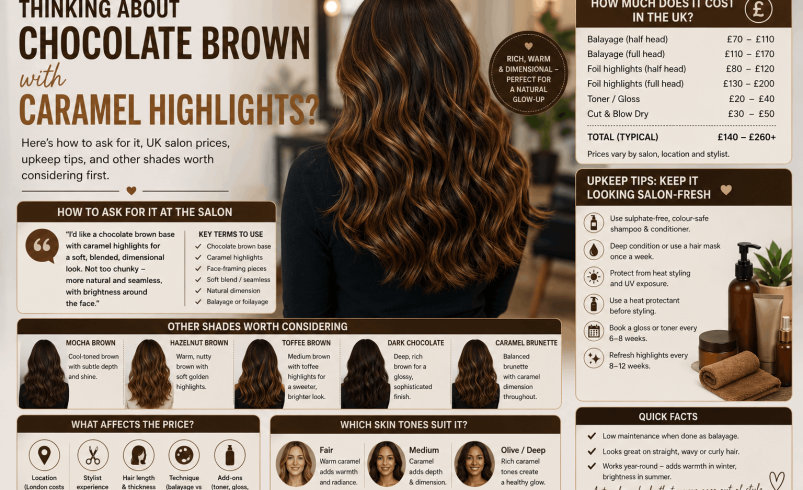
Walking in and saying “chocolate brown with caramel highlights” is a fine starting point, but colourists work faster and more accurately from specifics. Bring a photo, and be ready to answer a few things: how much contrast you want, whether you’d prefer foils or balayage, and whether you want the caramel concentrated around your face or blended evenly.
If you’re not sure which technique suits you, ask your colourist directly. Balayage tends to suit those who want low maintenance and soft regrowth, while foils give a more defined, salon-fresh look that needs redoing sooner.
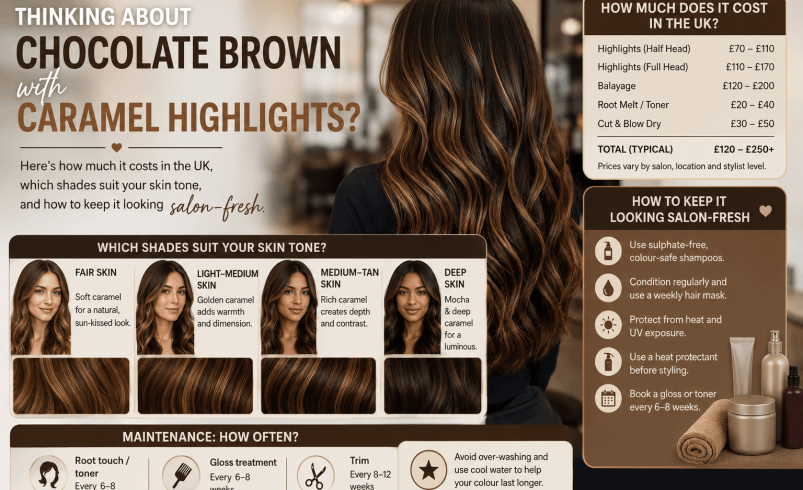
As a rough guide to current UK salon pricing, balayage at Rush Hair & Beauty starts from £134, while full head highlights and balayage at Toni&Guy salons typically range from around £130 to £210 depending on your stylist’s seniority and whether toner is included. Prices vary a fair amount by region and salon, so always check the individual salon’s current price list before booking, since these figures move fairly often.
Caramel Highlights on Light Brown Hair
If your natural base is already light to medium brown rather than dark chocolate, caramel highlights need a much gentler touch. Because there’s less contrast between your base colour and the caramel tone, the effect reads as sun-kissed and natural rather than dramatic, which makes it a popular choice for people who want a subtle upgrade rather than a whole new look.
Babylights work particularly well on light brown hair for exactly this reason. The fine, closely spaced highlights blend so seamlessly that many people can go three to four months between salon visits without an obvious regrowth line showing.
Balayage Honey Caramel: A Softer Take
Honey caramel balayage swaps the deeper amber tones of classic caramel for something lighter and golden, closer to actual honey in colour. It’s a popular alternative for anyone who wants brightness without going as warm or as dark as traditional caramel highlights.
This combination tends to suit lighter starting bases best, since it needs less lift to achieve the honeyed tone. If your hair is already dark brown to black, your colourist may recommend a gloss or toning step afterwards to stop the honey tones reading too brassy against your natural depth.
Best Hair Colour for Brown Skin Tones
This is a genuinely common question, and the honest answer is that skin tone matters less than undertone, though both play a role. Warm, golden, or olive undertones generally suit warm hair colours, including chocolate brown, caramel, honey, and copper, since these tones echo the warmth already in the skin.
Cooler or pink undertones tend to suit ash brunette, cool black, and burgundy shades with a blue base rather than an orange one. If you’re not sure which undertone you have, a simple trick is to check the veins on your wrist in natural light: greenish veins usually indicate a warm undertone, while blueish veins suggest cool, and if you genuinely can’t tell, you likely have a neutral undertone that can wear most colours well.
For deeper or richer brown skin tones specifically, warm caramel, honey, and copper highlights against a chocolate brown base tend to be especially flattering, since they add dimension without competing with the skin’s natural warmth. That said, this is a general guide rather than a rule, and a good colourist consultation will take your specific undertone, eye colour, and personal preference into account rather than skin depth alone.
Other Brunette and Bold Colour Trends Worth Knowing
If chocolate and caramel isn’t quite hitting the mark, here’s how it compares to the other shades people search for alongside it.
Burgundy Hair with Brown Highlights
This pairs a rich burgundy base, somewhere between deep red and aubergine, with warm brown highlights woven through for depth. It’s a good middle ground for anyone who wants red tones without the full commitment of an all-over burgundy colour, since the brown highlights soften the overall effect and make regrowth less obvious.
Burgundy Hair Highlights on Black Hair
Adding burgundy highlights to a black base gives subtle warmth and shine without lightening the hair dramatically, since burgundy dyes deposit colour rather than lifting it. This works especially well in direct light, where the red tones show through, while the hair still reads as black in most everyday lighting. It’s one of the lowest-commitment ways to add colour to naturally black hair, since it doesn’t usually require bleach first.
Blonde Highlights on Copper Hair
Copper is a warm, orange-red base, and adding blonde highlights on top brightens it up considerably while keeping that warmth. This combination needs more upkeep than most on this list, since both copper and blonde tones fade faster than brown, so expect to top up your colour every four to six weeks to keep it looking fresh rather than faded.
Silver Blonde Ash Hair
This one sits at the opposite end of the spectrum from everything else in this guide, trading warmth for cool, icy tones. Silver blonde ash hair needs a significant lightening process if you’re starting from brown or dark hair, usually multiple sessions of bleach followed by a toner to neutralise any remaining warmth. It’s a striking look, but it’s also the most demanding to maintain, needing purple shampoo regularly and salon toning roughly every four to six weeks to stop it turning yellow or brassy between visits.
At-Home vs Salon: What It Actually Costs
For a full transformation involving multiple foils or a proper balayage, a salon visit is genuinely worth the cost, since achieving even, natural-looking highlights on yourself at home is difficult, and getting it wrong (particularly going from dark to light) can seriously damage your hair.
That said, home dye is a realistic option if you’re simply refreshing an all-over brown base rather than adding highlights. UK supermarket and pharmacy brands like L’Oréal Preference (around £8 to £10 per box), Garnier Nutrisse (around £6 to £8), and Schwarzkopf Live (around £5 to £7) all offer chocolate and caramel brown shades, and they’re a reasonable option for root touch-ups between salon visits.
Highlighting kits for home use do exist, but they’re genuinely difficult to get even, especially at the back of your own head, so most colourists would recommend leaving highlights to a professional even if you’re comfortable doing your own root colour.
Patch Testing: Don’t Skip This Step
Before any colour service involving oxidative dye, UK salons are required to carry out a patch test, and it isn’t optional. Under Section 3 of the Health and Safety at Work Act, salons have a legal duty of care to their clients, and patch testing before colour services is standard practice to check for reactions to ingredients like PPD (paraphenylenediamine), a common allergen found in many permanent and semi-permanent dyes.
Most UK salons require this test at least 48 hours before your appointment, and you’ll usually need a new one if it’s been more than six months since your last visit, if you’ve switched salons, or if the salon has changed the product brand it uses. If you’re colouring at home, check the box for the same guidance, since home dye kits contain similar chemicals and can cause the same allergic reactions.
Maintaining Chocolate Brown Hair with Caramel Highlights
Warm brunette tones fade more gracefully than blonde or vivid colours, but they still need some care to stay looking rich rather than dull. Switch to a colour-safe, sulphate-free shampoo, since sulphates strip colour faster than gentler formulas.
A gloss or toning treatment every six to eight weeks keeps the caramel tones vibrant and stops them fading into a flatter, duller brown. Heat protection before styling matters here too, since repeated heat styling without protection dulls colour and dries out lightened sections faster than the rest of your hair.
How Long Does It Last?
Because balayage and babylights are applied away from the root, or in very fine sections, you can typically go three to four months before you need a full refresh, though a toning appointment every six to eight weeks in between will keep things looking their best. Foiled highlights, which go closer to the root, tend to need a full redo sooner, usually around eight to twelve weeks, since regrowth is more visible with this technique.
FAQs
How much does chocolate brown hair with caramel highlights cost in the UK?
Prices vary by salon and technique, but balayage typically starts from around £134, while full head foiled highlights at a mid-range UK salon usually run between £130 and £210 depending on your stylist’s seniority and whether toner is included.
Does chocolate brown hair with caramel highlights suit everyone?
It suits most people, though warmer undertones tend to see the most natural, flattering result. Cooler undertones can still wear it well, particularly with a slightly softer, less golden caramel tone chosen by a colourist.
How long do caramel highlights last before they need redoing?
Balayage and babylights typically last three to four months before a full refresh is needed, since they’re applied away from the root and grow out softly. Foiled highlights need redoing sooner, usually every eight to twelve weeks, since regrowth is more visible closer to the root.
Can I do caramel highlights at home?
Root touch-ups with an all-over brown box dye are realistic at home, but proper highlights are genuinely difficult to apply evenly yourself, particularly at the back of your head. Most colourists recommend leaving highlighting techniques like balayage or foils to a professional.
Is a patch test really necessary before hair colouring?
Yes. UK salons have a legal duty of care under the Health and Safety at Work Act to check for allergic reactions before applying oxidative colour, and most require a patch test at least 48 hours before your appointment.
What’s the difference between balayage and foiled highlights?
Balayage is painted on freehand, usually away from the root, and grows out softly with minimal visible regrowth line. Foiled highlights are applied from root to tip in sections, giving more even, defined contrast but a more obvious regrowth line over time.
What hair colour suits brown skin best?
Undertone matters more than skin depth, but warm caramel, honey, chocolate brown, and copper tones tend to complement warmer and deeper skin tones particularly well, since they echo the skin’s natural warmth rather than competing with it.
Will caramel highlights make my hair brassy?
They can fade towards brassy tones over time, particularly if you use sulphate shampoos or spend a lot of time in the sun without protection. Regular toning appointments and a colour-safe shampoo routine help keep the caramel looking golden rather than orange.