

Homecz Explained: What It Actually Is (and What to Check First)
- August 18, 2026
- 0
If you’ve searched Homecz and ended up more confused than when you started, you’re not alone. The honest answer is that Homecz isn’t one clear, verifiable brand, it’s



9621 Agnes Crossing, Lake Suzanneview, New Mexico Island 84604-9295.
If you’ve searched Homecz and ended up more confused than when you started, you’re not alone. The honest answer is that Homecz isn’t one clear, verifiable brand, it’s
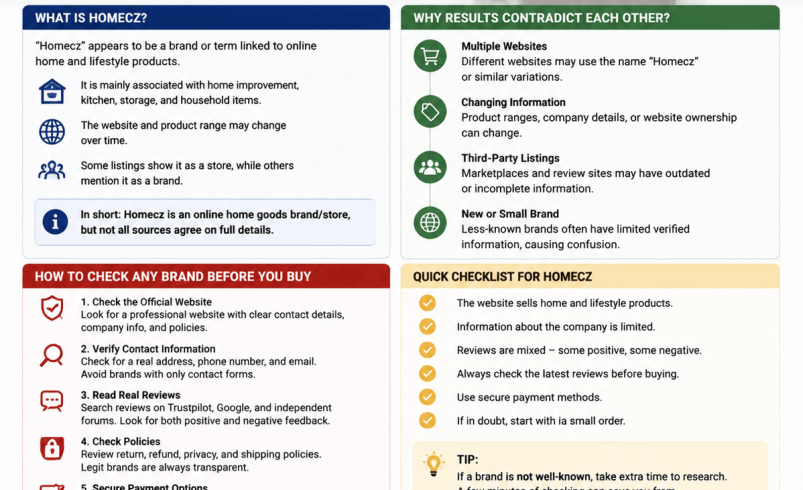
If you’ve searched Homecz and ended up more confused than when you started, you’re not alone. The honest answer is that Homecz isn’t one clear, verifiable brand, it’s a search term that dozens of content sites have latched onto, each describing something slightly different: an appliance range, a smart home concept, an interior design philosophy, even a general catch-all for anything home-related with “cz” tacked on the end.
That’s unusual for a real product or company. Genuine brands tend to have one consistent story: an official website, a registered company, clear pricing, and reviews that match up. Homecz doesn’t have that yet, at least not from what turns up in a proper search. This piece walks through exactly what’s out there, why the results don’t agree with each other, and how to check before you spend any money or hand over your details.
Search results for Homecz fall into a few different buckets, and it’s worth being clear that these aren’t confirmed as the same thing:
This pattern has a name in SEO circles: content spun around a keyword rather than a real subject. A batch of articles gets written to rank for a search term that’s picking up traffic, often because a name sounds plausible or a spelling variation of something else is trending. Each writer fills in the gaps with whatever sounds credible.
That explains a few odd details you’ll notice if you read a handful of these articles back to back. Specific product names appear (the “CZ-800”, for example) but don’t show up on any retailer site, review platform, or price comparison tool. Descriptions shift from appliances to interior design to smart home tech depending on which page you land on. One article even states outright that the author has never used a product called Homecz, while still writing at length about what it supposedly offers.
None of this means someone is deliberately scamming you, plenty of low-effort content gets published just to earn ad revenue from search traffic. But it does mean you shouldn’t treat any specific claim (a price, a model number, a company name) as reliable until you’ve checked it independently.
Before you buy anything or fill in a form with your name, address or payment details, run through this quick checklist.
A genuine UK-based seller should show up here with a registered address and company number. If nothing matches, treat that as a warning sign rather than proof of anything definite, some sellers do trade from abroad, but it means you need to dig further.
A real business has one address, one phone number and one set of terms and conditions, not three different versions across three different websites. If the “About” page changes description depending on which site you’re reading, that’s the spun-content pattern again.
Search the exact product name plus “review” and see whether results come from recognisable retailers (Amazon, Currys, AO.com) or independent review sites you already trust. If every review you find sits on the seller’s own site, be cautious.
If a site asks for payment before you can see full terms, a returns policy, or a real UK contact address, stop. This applies whether you’re buying an appliance or signing up for any kind of home service.
Free tools like who.is show when a domain was registered. A brand claiming years of history but with a website registered a few months ago is worth a second look.
If someone told you specifically about Zen Home CZ washing machines or dryers, the same rules apply. Look the model number up directly on a UK retailer’s search bar (Currys, AO.com, John Lewis) rather than trusting a description on a blog. If it doesn’t appear on any mainstream UK retailer, treat the “specs” you’ve read (capacity, energy rating, price) as unverified rather than fact, appliance specifications matter for safety and warranty reasons, so this isn’t a detail to guess on.
If your search was really about smart home technology or “zen” style interior design rather than a specific brand, you’ll get better results searching those terms directly. UK-focused sources like Which? for appliance reviews, or established interior design publications, give you verified advice rather than content built around a trending keyword.
There’s no single verifiable company behind the term. Search results describe several different, unconnected things under the same name, with no official site or Companies House registration tying them together.
It appears in several articles describing washing machines and dryers, but the specific model numbers mentioned don’t show up on mainstream UK retailer sites, so it can’t be confirmed as a currently available brand in the UK.
Because the content appears to be written around a search term rather than a single confirmed subject, different writers have filled in different details, which is why descriptions range from appliances to design philosophy to smart home tech.
Only if you can verify the seller through Companies House, find consistent contact details, and see independent reviews on a platform you already trust. Don’t pay upfront for anything you can’t verify this way.
Try specific, well-known terms like “smart home lighting UK” or check appliance advice through Which?, since these give you sourced, checkable information rather than content built around a single trending keyword.
It’s possible. Search overlap with names like Home Connect (a genuine European smart-appliance app) suggests some searches may be typos or near-matches rather than searches for a distinct brand.


