

Cedar Gazebos UK: Sizes, Prices, and Planning Rules 2026
- August 20, 2026
- 0
If you’re comparing cedar gazebos for a UK garden, the short answer is this: cedar is one of the best timbers for the job because it contains natural



9621 Agnes Crossing, Lake Suzanneview, New Mexico Island 84604-9295.
If you’re comparing cedar gazebos for a UK garden, the short answer is this: cedar is one of the best timbers for the job because it contains natural
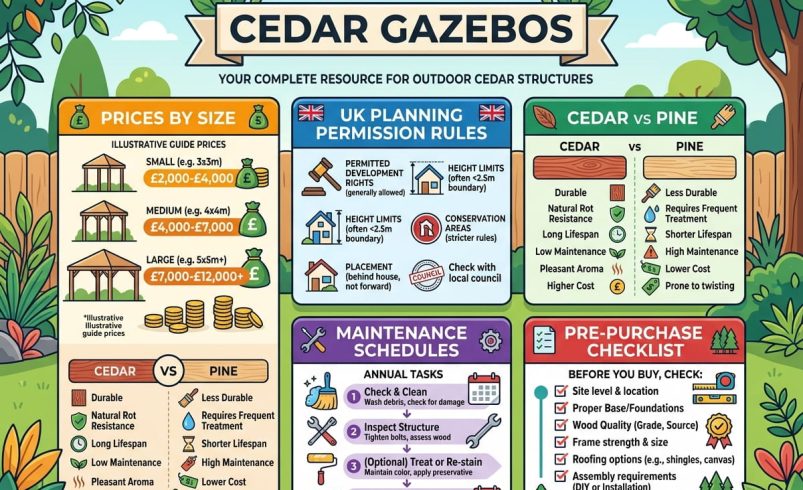
If you’re comparing cedar gazebos for a UK garden, the short answer is this: cedar is one of the best timbers for the job because it contains natural oils that resist rot, insects, and moisture without heavy chemical treatment, so it holds up well through wet British winters with far less maintenance than untreated softwood. That natural resistance, combined with a warm, honey-toned finish that many people prefer over painted or stained pine, is why cedar has become the go-to timber for premium garden gazebos sold in the UK.
This guide covers what actually sets cedar apart from other gazebo timbers, what sizes and prices to expect in 2026, the planning permission rules that catch people out, and how to keep a cedar gazebo looking good for decades rather than years.
Cedar’s main advantage isn’t strength, it’s chemistry. The wood contains natural oils called extractives, which are released slowly over time and act as a built-in preservative against rot, fungal decay, and wood-boring insects. This is why cedar gazebos are often sold with a light factory stain rather than the heavy pressure treatment used on pine or spruce structures.
Most UK cedar gazebos use kiln-dried cedar, which reduces the wood’s internal moisture before manufacture. Kiln drying does two useful things: it makes the timber lighter to handle during assembly, and it reduces the amount the wood will warp or move once it’s outdoors and exposed to seasonal changes in humidity.
Left completely untreated, cedar naturally weathers to a soft silver-grey over a few years rather than rotting the way untreated pine would. Some owners like this look and let it happen on purpose. Most choose to maintain the original warm tone with periodic staining instead, which is entirely a style choice rather than a structural necessity.
This is the real decision most UK buyers are actually weighing up, even when they’ve searched specifically for cedar.
Cedar costs more upfront but needs less frequent maintenance, resists insects naturally, and keeps a premium appearance for longer. It’s the better choice if you want a structure that looks good with minimal upkeep and you’re prepared to pay for that.
Pressure-treated pine is cheaper to buy and, when properly treated to Use Class 3 or 4 standard, performs well structurally, but it typically needs more frequent re-staining to stop it looking tired, and it’s more vulnerable to insect damage if the factory treatment is ever compromised by a cut or scratch.
Some UK suppliers, including several gazebo brands sold through B&Q and The Range, pair cedar frames with galvanised or aluminium roof panels rather than timber roofing, which adds weatherproofing without relying on the frame timber to do all the work. This combination tends to sit at the premium end of the market but reduces long-term maintenance further still.
Cedar Gazebo Sizes and Styles Available in the UK
UK ranges typically span from compact garden structures to full outdoor entertaining spaces. Common sizes include:
Roof styles vary too. Pitched aluminium roofs are common on premium cedar ranges since they shed rain effectively and need no maintenance of their own, while cedar shingle roofs give a more traditional look but require the same periodic care as the frame. Some ranges also offer curtain or privacy panel add-ons, usually sold separately, made from weather-resistant outdoor canvas.
How Much Do Cedar Gazebos Cost in the UK?
Prices vary a fair amount by size, roof material, and whether installation is included, but here’s a realistic 2026 benchmark from current UK retailers:
Prices move around with seasonal sales and supplier promotions, particularly in spring and early summer, so treat these as a general guide and check the current price on the retailer’s own site before you commit.
Delivery and Lead Times to Expect
Because most premium timber structures are hand-built or imported rather than held in bulk warehouse stock, lead times run longer than a typical online order. Several UK suppliers currently quote around 4 to 5 weeks from order to delivery for cedar and other timber garden buildings, and some offer full installation as a separate paid service on top of delivery.
If you’re planning around a specific date, such as a summer event or a house move, order well ahead of that date and confirm the current lead time directly with the retailer, since this fluctuates with demand and can stretch further during the busiest spring and early summer months.
It’s worth pausing here, because a fair few buyers land on a gazebo search when a different structure would actually suit their garden better.
A gazebo is a freestanding, fully roofed structure, open on the sides (sometimes with curtain panels), designed to provide shelter from rain and sun while keeping the space feeling open. This makes it the right choice if you want somewhere to sit out in changeable weather without fully enclosing the space.
A pergola has a partial or slatted roof rather than full coverage, so it offers some shade but little protection from rain. Pergolas suit gardens where the priority is defining a seating or dining area and supporting climbing plants, rather than sheltering from British weather specifically.
A summerhouse is a fully enclosed timber building with walls, windows, and usually a lockable door, closer to a small garden room than an open structure. It suits year-round use, including storage or as a home office, but it takes up more of your permitted development allowance and typically needs more groundwork to install properly.
If rain shelter matters more than full enclosure, a cedar gazebo tends to be the better fit of the three, since it gives usable outdoor space through a British summer’s unpredictable weather without the cost and planning considerations of a full garden building.
For most UK gardens, no, but the rules are specific enough to catch people out, so it’s worth checking your own plot against them properly.
A garden gazebo is generally treated as an outbuilding under permitted development rights in England, meaning it can usually go up without a formal planning application, provided it meets several conditions together, not just one:
Listed buildings and properties in conservation areas usually don’t benefit from the same permitted development rights, so a cedar gazebo that would be exempt elsewhere may need Listed Building Consent or a full planning application on a restricted property. If your garden slopes or the ground level differs from your neighbour’s, get the height measured accurately from your own ground level before assuming you’re within the limit.
Since local authority interpretation can vary slightly between councils, it’s genuinely worth a quick call to your local planning department if your gazebo sits anywhere near these thresholds, rather than assuming and risking an enforcement notice later.
Cedar’s natural rot resistance means you can, technically, leave it completely untreated and it will still outlast most other softwoods. In practice, most UK owners choose to maintain the original colour, since untreated cedar weathers to grey within a couple of UK summers, particularly on south-facing structures that get consistent sun.
If you want to keep the warm cedar tone, plan on reapplying a semi-transparent oil-based stain or a dedicated cedar protector roughly every 1 to 2 years, more often on exposed or south-facing structures and less often in sheltered spots. Water-based semi-transparent stains tend to need reapplying more frequently than oil-based ones, though oil-based products can be harder to apply evenly, so check the manufacturer’s specific guidance for the product you choose.
Before staining: clean the wood with water and a mild detergent, then lightly sand any rough or weathered patches so the new coat absorbs evenly rather than sitting on the surface.
After assembly: many suppliers recommend waiting around 3 months before the first application, since a factory finish is often already in place and fresh cedar needs a short settling period outdoors first.
Hardware check: alongside staining, tighten any loose bolts or brackets at least once a year, and confirm the structure is still properly anchored to the ground, particularly after a windy winter.
If you’d rather skip staining altogether, that’s a legitimate choice with cedar specifically, since the natural grey patina it develops isn’t a sign of decay the way it would be with most other softwoods. Just make sure the roof has adequate ventilation underneath, since trapped moisture, not colour change, is what actually shortens a cedar structure’s life.
For most UK buyers, yes, if you value lower maintenance over the structure’s lifetime. Cedar’s natural oils reduce how often you need to re-stain compared with pressure-treated pine, so the higher upfront cost is partly offset by less ongoing upkeep.
Usually not, provided the structure stays within permitted development limits: no more than 2.5 metres tall within 2 metres of a boundary, sited behind the house, and under 50% total garden coverage combined with any other outbuildings. Listed properties and conservation areas often have stricter rules, so it’s worth checking locally if you’re unsure.
A well-maintained cedar gazebo commonly lasts 20 years or more, since the timber’s natural oils resist the rot and insect damage that shortens the life of untreated softwood. Roof material also matters here, with aluminium or galvanised steel roofs typically outlasting timber shingle roofing with far less upkeep.
Yes, this is one of cedar’s genuine advantages over other timbers. Left untreated, it weathers to a silvery grey patina rather than rotting, though most owners choose to stain it periodically to keep the original warm tone.
Prices for a typical UK cedar gazebo range from around £1,400 for a compact 2.7m square structure to £2,400 or more for a larger pavilion-style version with a skylight roof or full enclosure panels. Professional installation, where offered, usually adds a few hundred pounds on top.
Most kits are designed for DIY assembly by two people over a weekend, since the timber typically arrives pre-cut and pre-drilled from the factory. Professional installation is usually available as an optional paid extra if you’d rather not tackle it yourself.
Aluminium or galvanised steel roofing sheds rain effectively and needs no maintenance of its own, making it a strong choice for the UK climate specifically. Cedar shingle roofing gives a more traditional look but requires the same periodic staining or sealing as the rest of the frame.
Most kits need a firm, level surface such as a patio, decking, or a concrete or paving slab base rather than bare soil or grass. Ground anchor brackets are usually included to secure the structure and stop it shifting in strong wind.