Above Ground Swimming Pool Solar Heaters: 2026 UK Guide
- August 20, 2026
- 0
If you’ve just filled an above ground pool and discovered the water’s still freezing in June, you’re not alone. Above ground swimming pool solar heaters use free energy



9621 Agnes Crossing, Lake Suzanneview, New Mexico Island 84604-9295.
If you’ve just filled an above ground pool and discovered the water’s still freezing in June, you’re not alone. Above ground swimming pool solar heaters use free energy
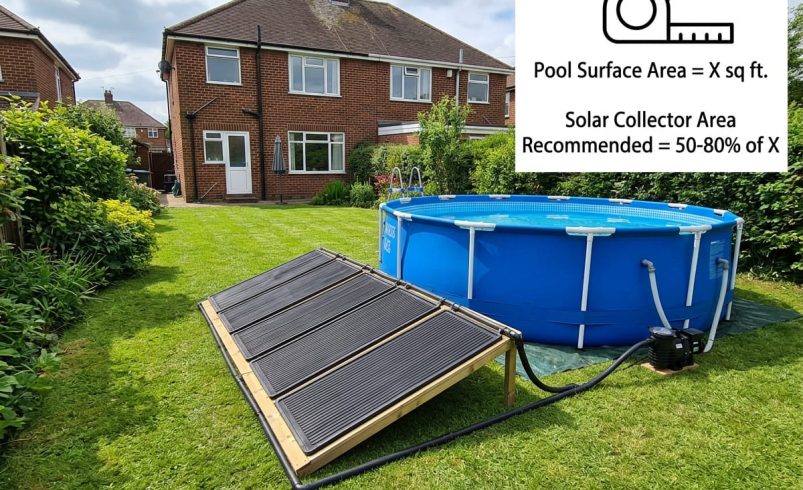
If you’ve just filled an above ground pool and discovered the water’s still freezing in June, you’re not alone. Above ground swimming pool solar heaters use free energy from the sun to raise the water temperature, typically by 3°C to 5°C with a basic mat and up to 8°C with a properly sized panel system, and they cost nothing to run beyond your existing pool pump.
They won’t turn your pool tropical on a grey British afternoon, but paired with a solar cover, they genuinely extend your swimming season by several weeks either side of summer. This guide covers what’s actually available in the UK right now, real prices from UK suppliers, how to size a system properly, and whether solar heating alone is enough or whether you’ll want a backup.
Your existing pool pump pushes water through the filter as normal, then diverts a portion through the solar collector before returning it to the pool. Sunlight heats the black tubing or matting, the water inside warms up, and it flows back into the pool slightly warmer than it left.
No electricity, gas, or separate wiring is involved in the heating itself. The only power draw is your pool pump, which you’re running anyway for filtration, so the marginal running cost of solar heating is close to zero.
There are three main types you’ll find sold for above ground pools in the UK:
Prices vary a lot depending on which type you choose and how big your pool is. Here’s what’s currently available from UK retailers:
The Bestway pad is the classic entry point. It’s compatible with cartridge filter pumps running at 9,462 litres per hour and above, or sand filter pumps at 8,327 litres per hour and above, and it comes with adapters for both 3.2cm and 3.8cm hose sizes. Reviewers on Amazon.co.uk report it raising temperature by 2°C to 4°C on an average day and considerably more during a heatwave.
At the top end, the Thermecro evacuated tube system uses double-walled vacuum glass tubes, the same principle as a thermos flask, and is genuinely a different tier of performance. It’s ground-mounted with its own frame and is a serious investment rather than a quick add-on, so it makes more sense if you’re planning to use the pool from spring through autumn rather than just July and August.
This is the question most buyers care about, and honest suppliers are upfront that it depends heavily on the weather. A basic solar mat typically adds 3°C to 5°C on a sunny day, based on manufacturer figures for both the Bestway and Intex products. On an overcast day, expect closer to 1°C to 2°C, and on a properly sized rigid panel system with good sun exposure, 6°C to 8°C is achievable.
British weather is the honest limiting factor here. As 1st Direct Pools notes on their above ground pool heater guide, solar heating “depends on consistent sunny weather to work at full capacity, which isn’t always reliable with British weather.” That’s not marketing spin, it’s just accurate, so treat solar as a supplement to a good routine rather than a standalone fix if you want guaranteed warmth.
Solar collectors are sized by surface area, not pool volume, because most heat is lost through evaporation at the water’s surface rather than through the sides. The widely used rule across the industry is that your collector area should equal 50% to 100% of your pool’s surface area.
For a typical UK climate, aim toward the higher end of that range, 80% to 100% coverage, since our sunshine hours are less reliable than somewhere like southern Spain or Florida. To work out your pool’s surface area for a round pool, multiply pi (3.14) by the radius squared. A common 12ft (3.66m) round above ground pool has a radius of 1.83m, giving a surface area of roughly 10.5 square metres, meaning you’d want somewhere close to 8 to 10 square metres of collector for decent results.
If that sounds like more panel than you expected, it usually is. Most people underbuy on their first attempt and end up disappointed, so it’s worth doing this sum properly before ordering.
Yes, and suppliers are consistent on this point. Any heat you generate during the day, whether from the sun directly or from a solar heater, escapes overnight through evaporation unless it’s trapped by a cover. Pairing a solar heater with a well-fitted solar cover reduces overnight heat loss significantly and means you’re not starting from scratch each morning.
Solar covers for above ground pools start from around £8 for a basic fitted cover sized to a 10ft metal frame pool, based on current UK retailer pricing, so it’s a small addition against the overall cost of your heating setup. Skipping this step is the single biggest reason people feel underwhelmed by solar heating.
Most solar mats and pads are genuinely DIY-friendly and designed to connect in line with your existing pump and filter setup using the hose fittings supplied.
Multiple solar pods or mats can usually be daisy-chained together if you have room, which is a straightforward way to scale up coverage without buying a completely different system.
No, not for the heater itself. Solar mats, pods, and panels are classed as pool equipment rather than a structure, so they sit outside planning permission requirements in almost every case.
The pool itself is a separate question. Most outdoor above ground pools fall under permitted development rights in England, meaning no planning permission is needed provided the pool and any associated structures don’t cover more than 50% of the garden area and the pool isn’t raised more than 30cm above ground level with decking. If you’re mounting rigid solar panels on your house roof rather than ground-mounting them, and you live in a conservation area or have a listed building, it’s worth a quick check with your local council beforehand, but this is the exception rather than the rule.
Solar isn’t your only option for above ground pools, and it’s worth understanding how it stacks up against the alternatives before you commit.
[Table: Above ground pool heating options compared – Solar heater: lowest running cost, weather dependent, £55-£2,160 typical range | Electric heater (e.g. 3kW Elecro Nano): consistent output regardless of weather, higher running cost, from £270 | Heat pump (e.g. Inverter Comfortline): most efficient of the powered options, higher upfront cost, from £899 | Gas heater: fastest heat-up, suited to colder climates, ongoing fuel cost]
A sensible middle ground that a lot of UK pool owners land on is solar as the primary method through the sunniest months, backed by an electric heater or heat pump for cooler mornings, evenings, or early and late season swimming. This avoids the upfront cost of a heat pump doing all the work while still giving you reliable warmth when the sun doesn’t cooperate.
Yes, though results depend on consistent sunshine, which British weather doesn’t always deliver. A well-sized system paired with a solar cover can realistically add 3°C to 8°C and extend your swimming season by several weeks either side of summer.
Basic solar mats start from around £55, dome-style pods run from about £120, kit-based systems sit around £395, and premium evacuated tube systems reach £2,160 or more. Multiple units are often needed for full coverage, so total cost depends on your pool size.
A basic solar mat typically adds 3°C to 5°C on a sunny day, dropping to 1°C to 2°C on overcast days. A properly sized rigid panel system with good sun exposure can add 6°C to 8°C.
Aim for collector area equal to 50% to 100% of your pool’s surface area, and lean toward the higher end for the UK’s less consistent sunshine. Calculate surface area using length times width for rectangular pools, or pi times radius squared for round pools.
No separate electrical connection is needed for the heating itself. The only power used is your existing pool pump, which circulates water through the collector using your current filtration system.
Yes, most systems are designed to stay connected permanently during the swimming season, with a bypass valve to switch the flow if you want to filter without heating. Disconnect and drain the unit before winter to avoid frost damage.
They do different jobs and work best together rather than as alternatives. A cover traps existing heat and stops evaporation loss overnight, while a solar heater actively adds new heat during the day.
No, a solar heater counts as pool equipment rather than a structure, so it falls outside planning permission requirements. The pool itself may need checking against permitted development rules, but the heater does not.
Basic solar mats typically last several seasons with proper winter storage, while rigid panel systems and evacuated tube collectors are built for longer-term outdoor use and can last well over a decade with reasonable care.